

The open-source audit of what AI assistants say about your brand
With the receipts: every verdict traced to the answer, the cited page, and the fix. Run it on your own domain, with your own keys.
npx saylent audit example.comOne OpenAI or Anthropic key runs the audit with that engine. Two keys turn on the cross-family judge; Gemini and Perplexity keys add those engines.
All four: about $0.60 to $1.20 a run, of your own credits. Our two recorded runs cost $0.93 and $1.11.
Check what AI crawlers can read on your site
Type a domain. In a few seconds you see which AI crawlers your site lets in: robots.txt, a live per-crawler fetch, your schema and your meta directives. No keys, no sign-up, no LLM calls, nothing stored.
This reads your gates, not your answers. It cannot tell you whether ChatGPT, Claude, Gemini or Perplexity actually recommend you, who they recommend instead, or which sources they cite. That needs the full audit.
Run it once
One command, your own keys, and a report you can open from disk, email, or drop in a ticket. It prints what it is about to spend before it spends anything, and a dry run costs $0.
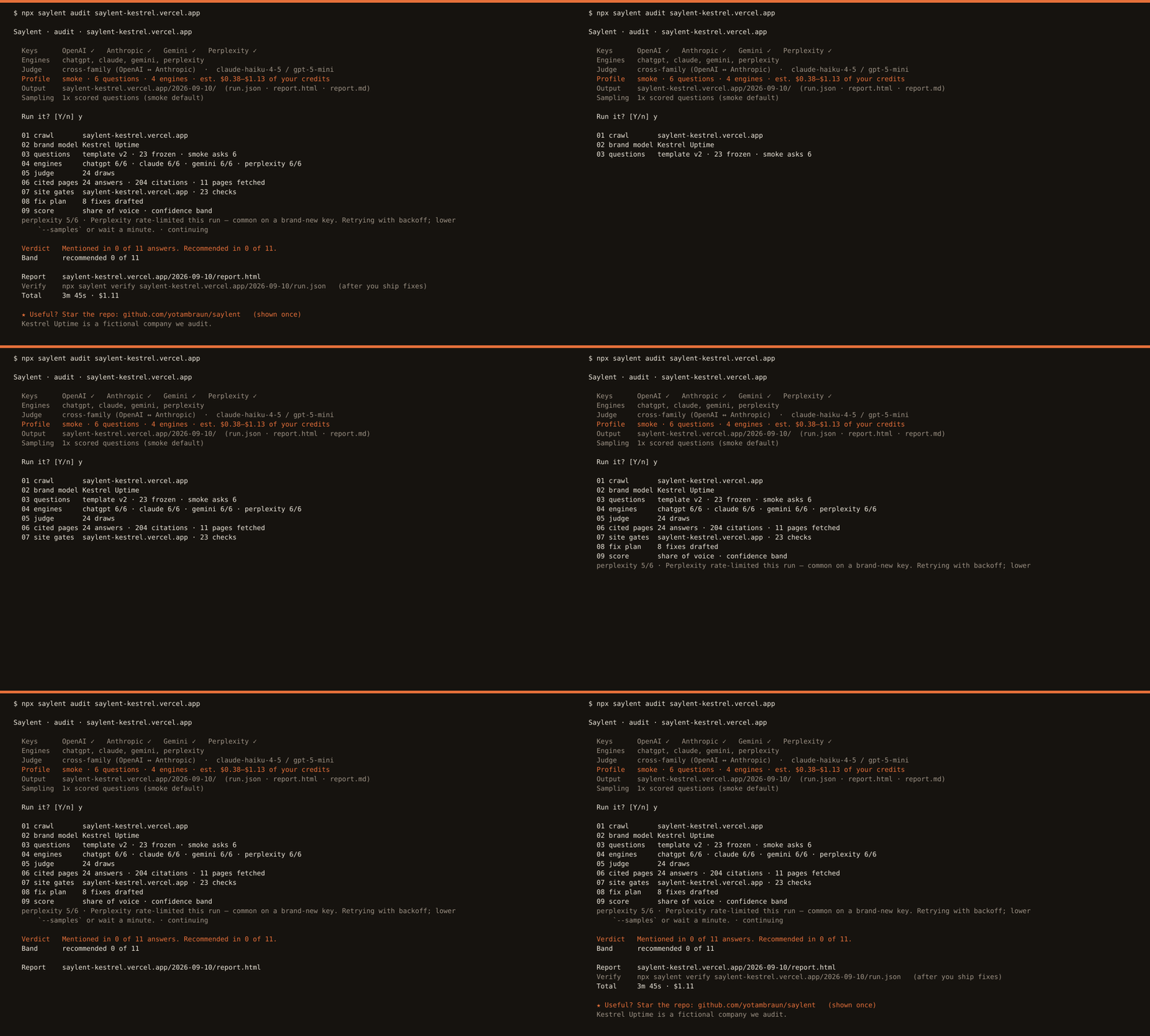
What the command hands you: four receipts, one screenshot each
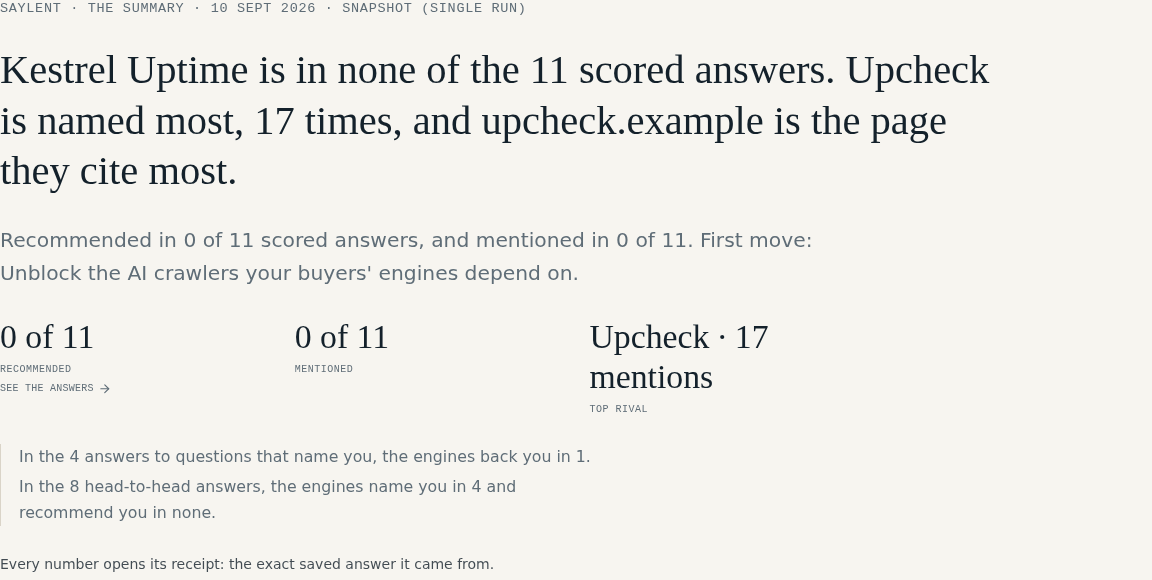
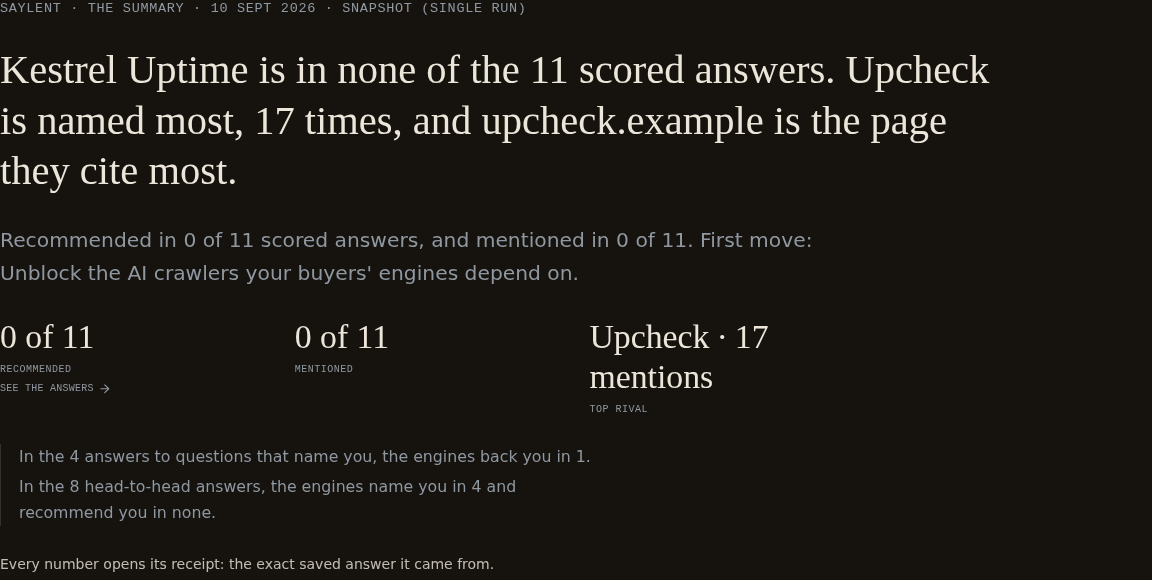
Verdict
"Kestrel Uptime is in none of the 11 scored answers. Upcheck is named most, 17 times, and upcheck.example is the page they cite most."
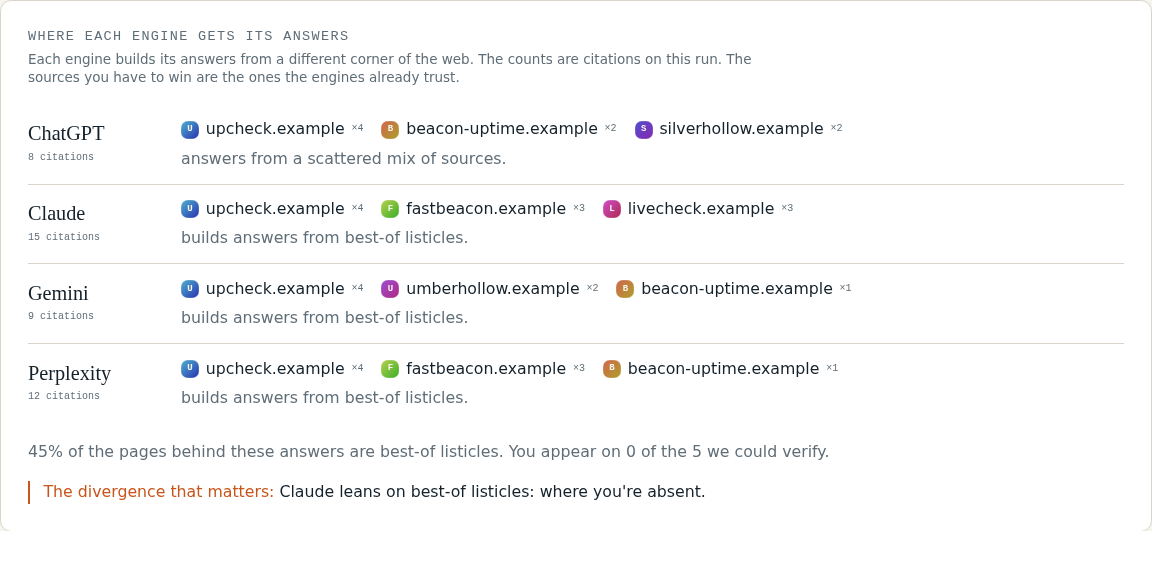
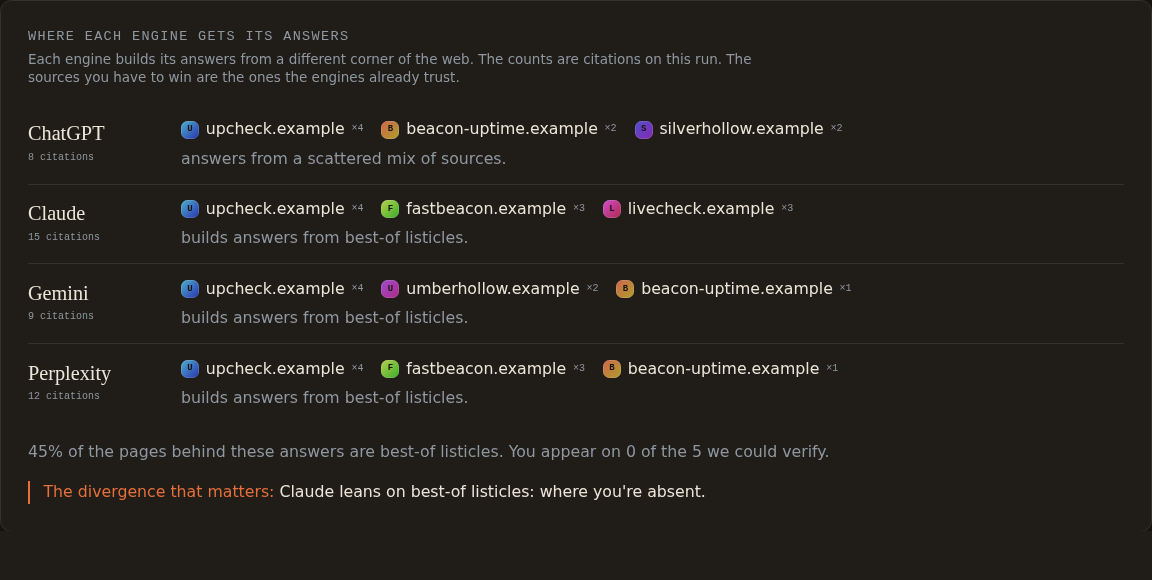
Receipt
The exact answer, the engine, the date, and the page it was built from.
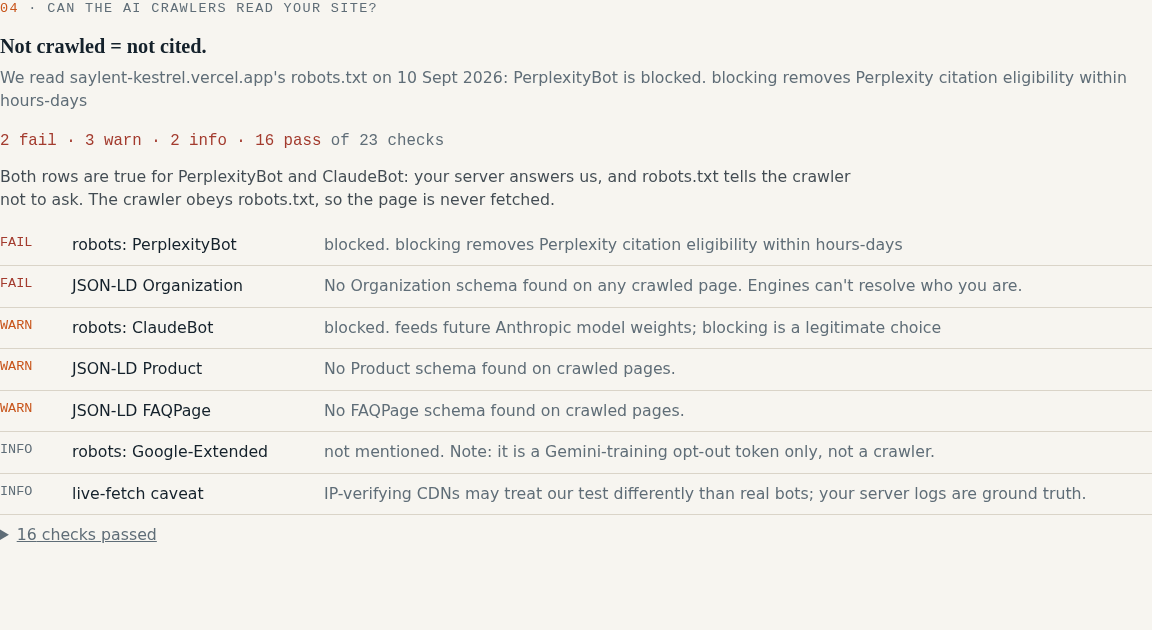
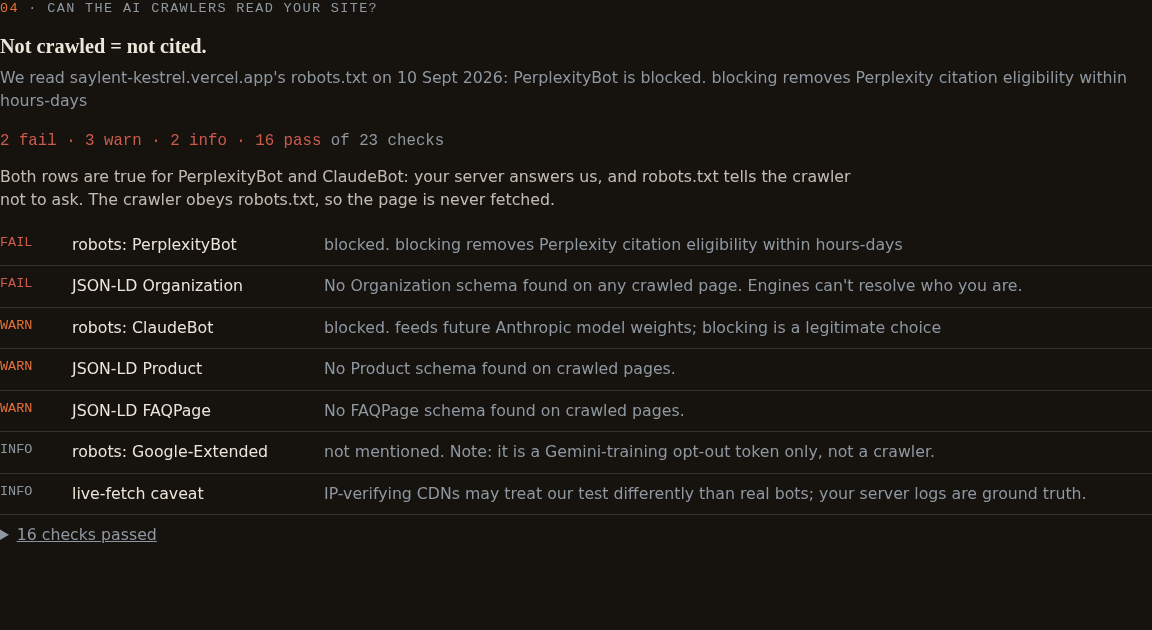
Gate
Which AI bots your site lets in, tested live, not guessed from robots.txt.
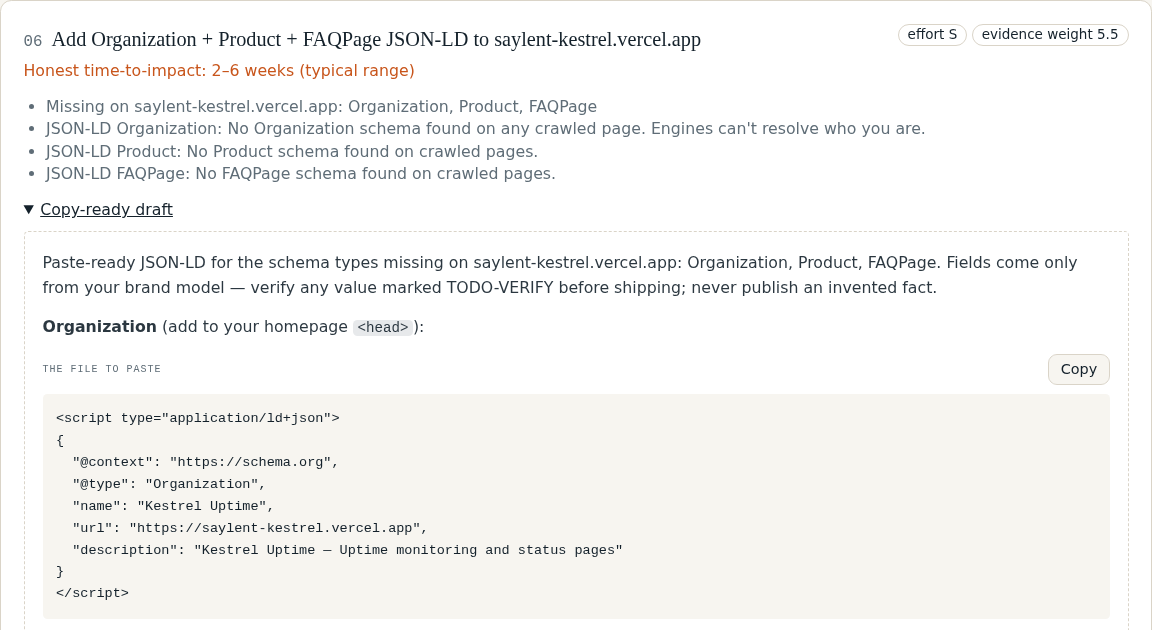
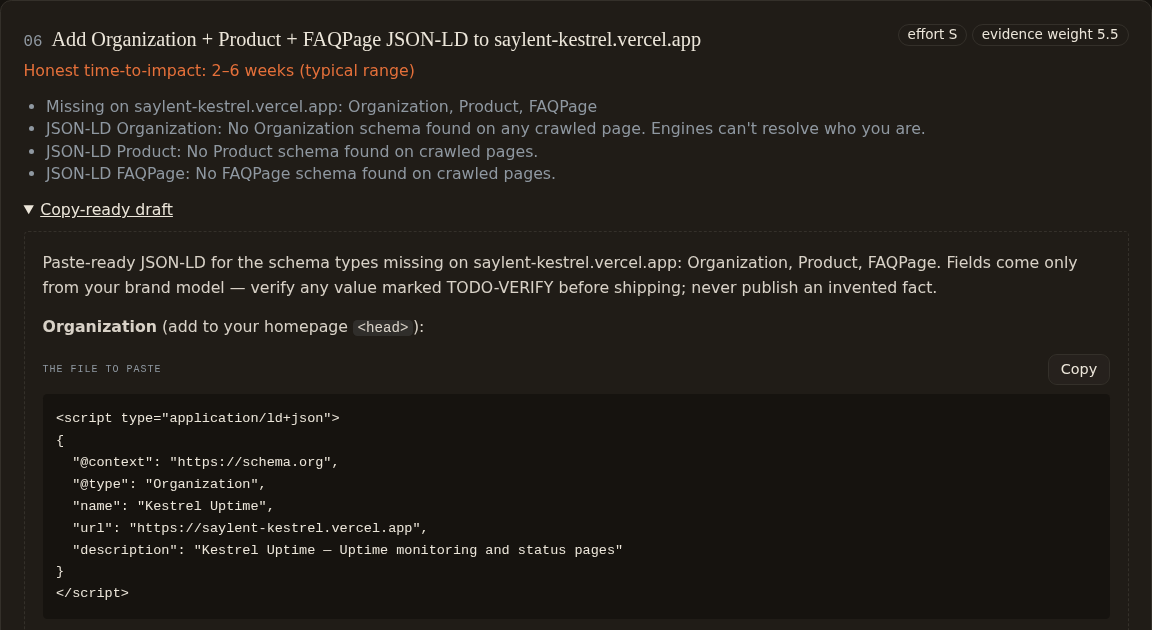
Fix
Drafted, evidence-anchored, ready to ship: JSON-LD, a comparison page, entity copy.
Every screenshot is generated from the sample run, never hand-edited.
Keep score as a team
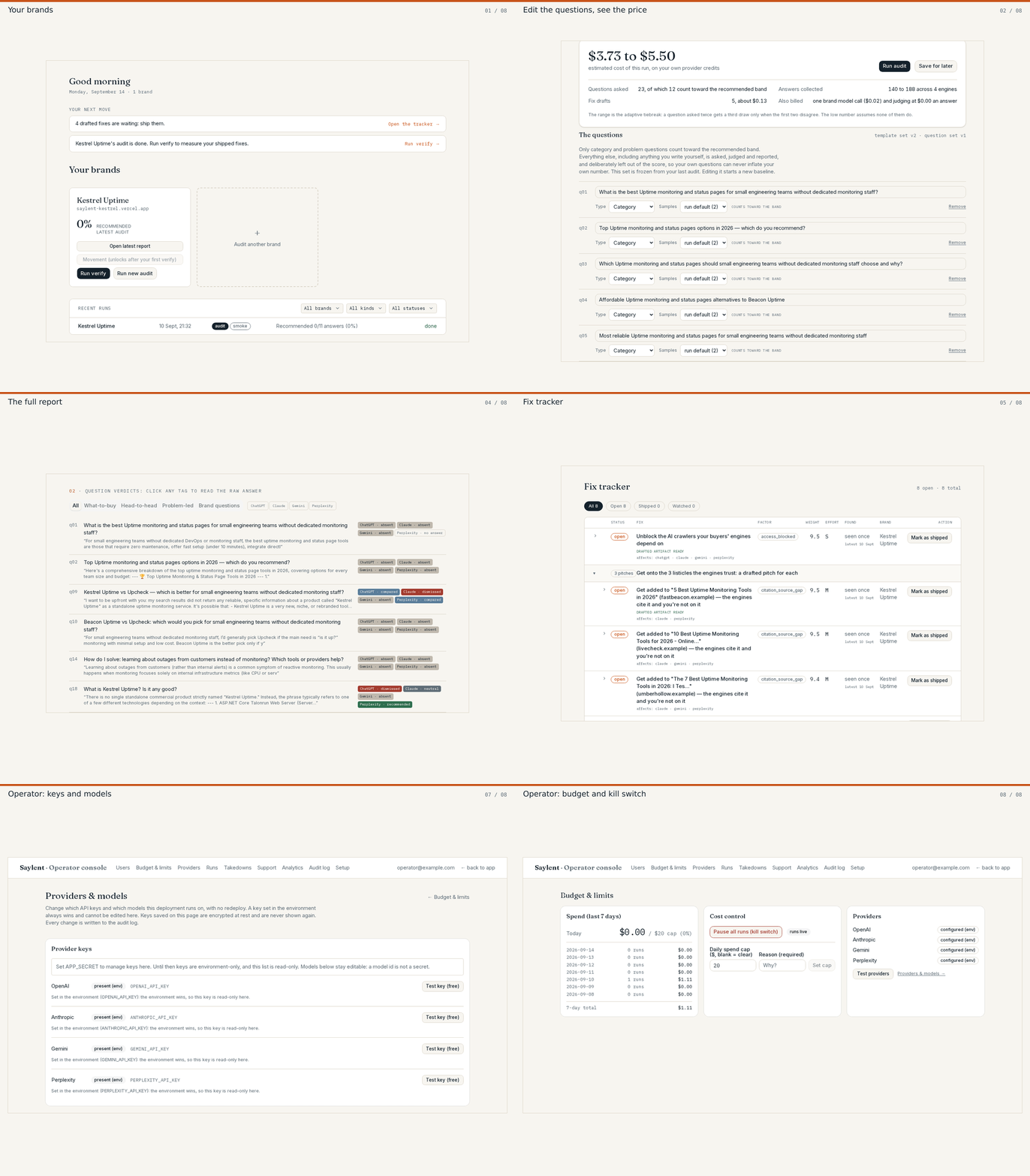
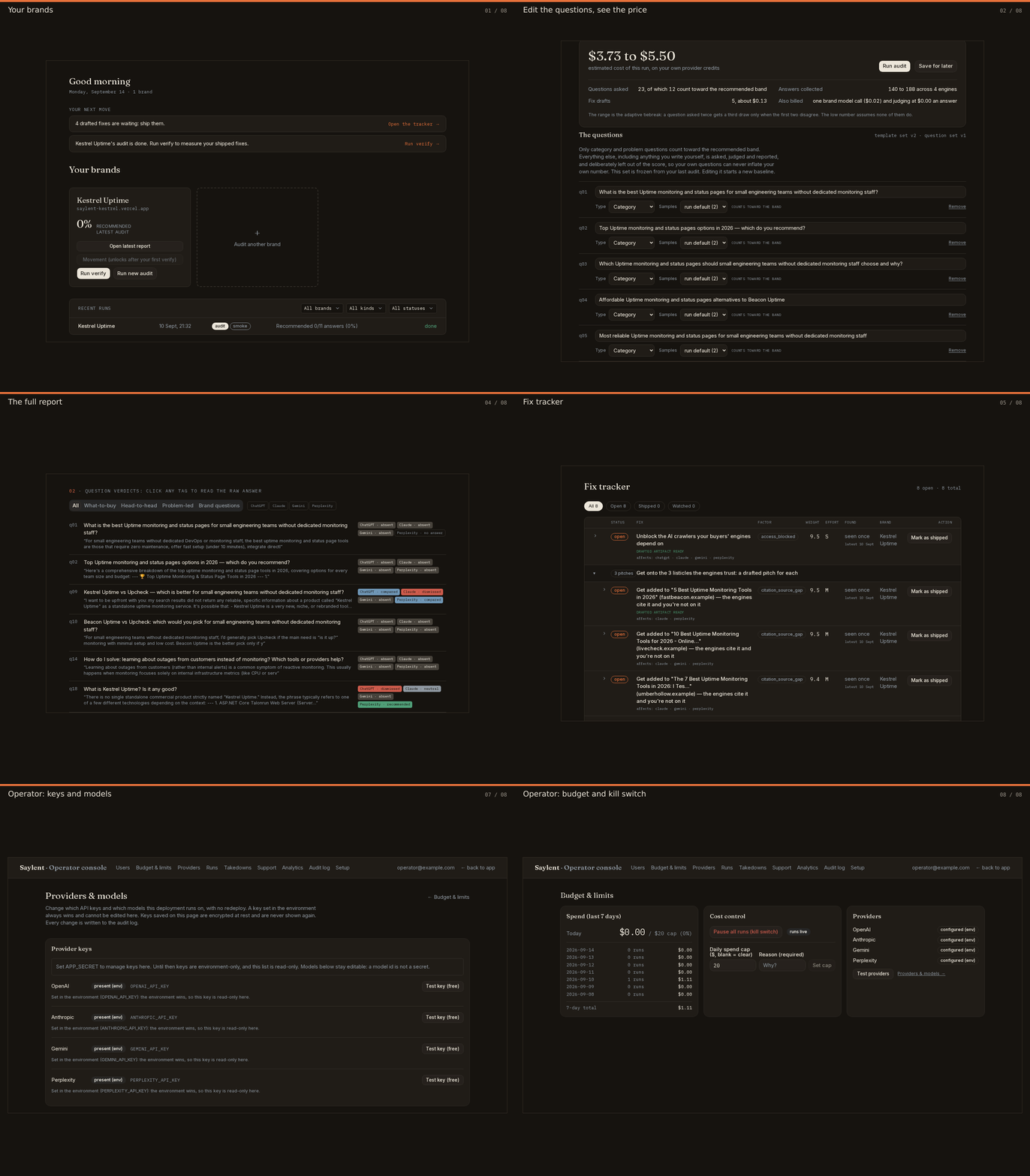
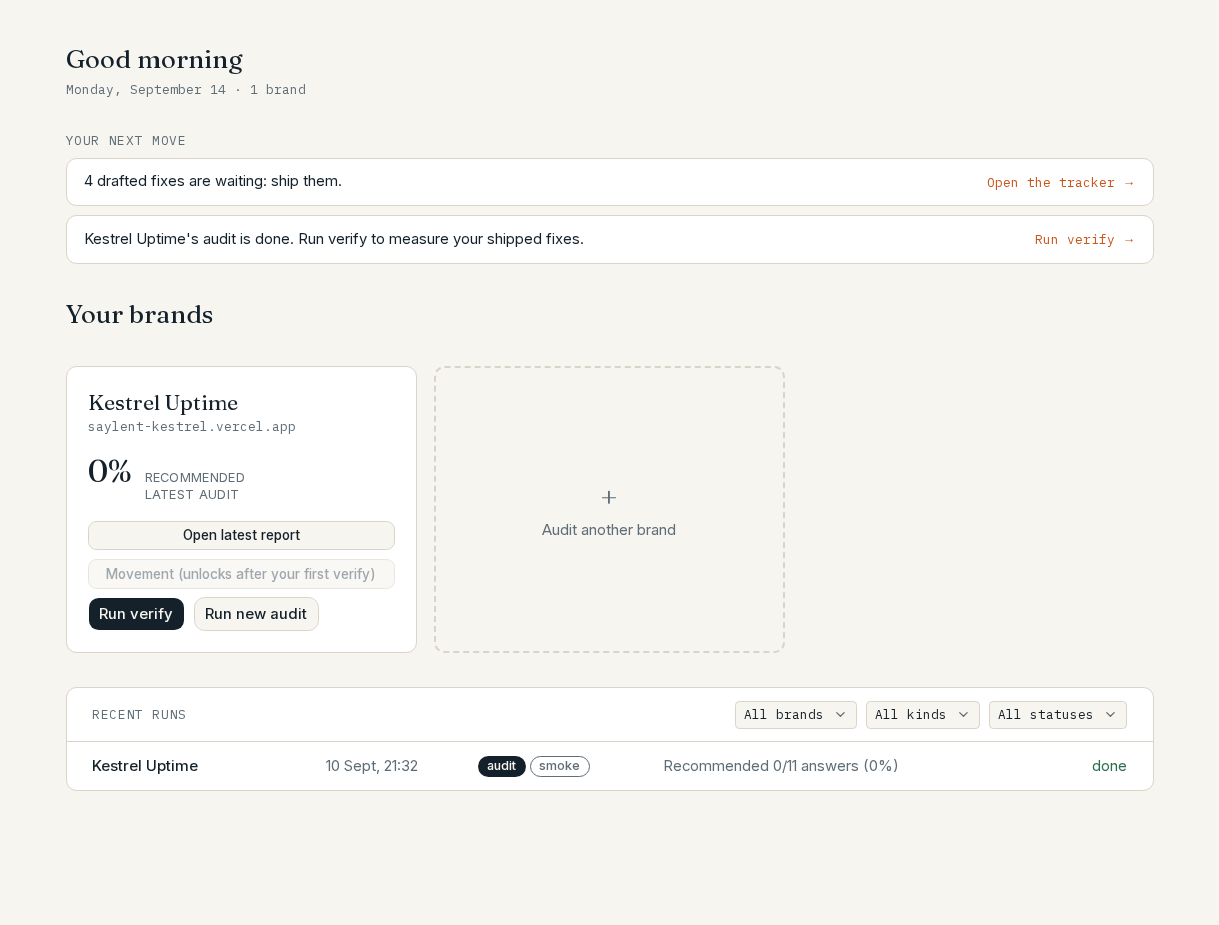
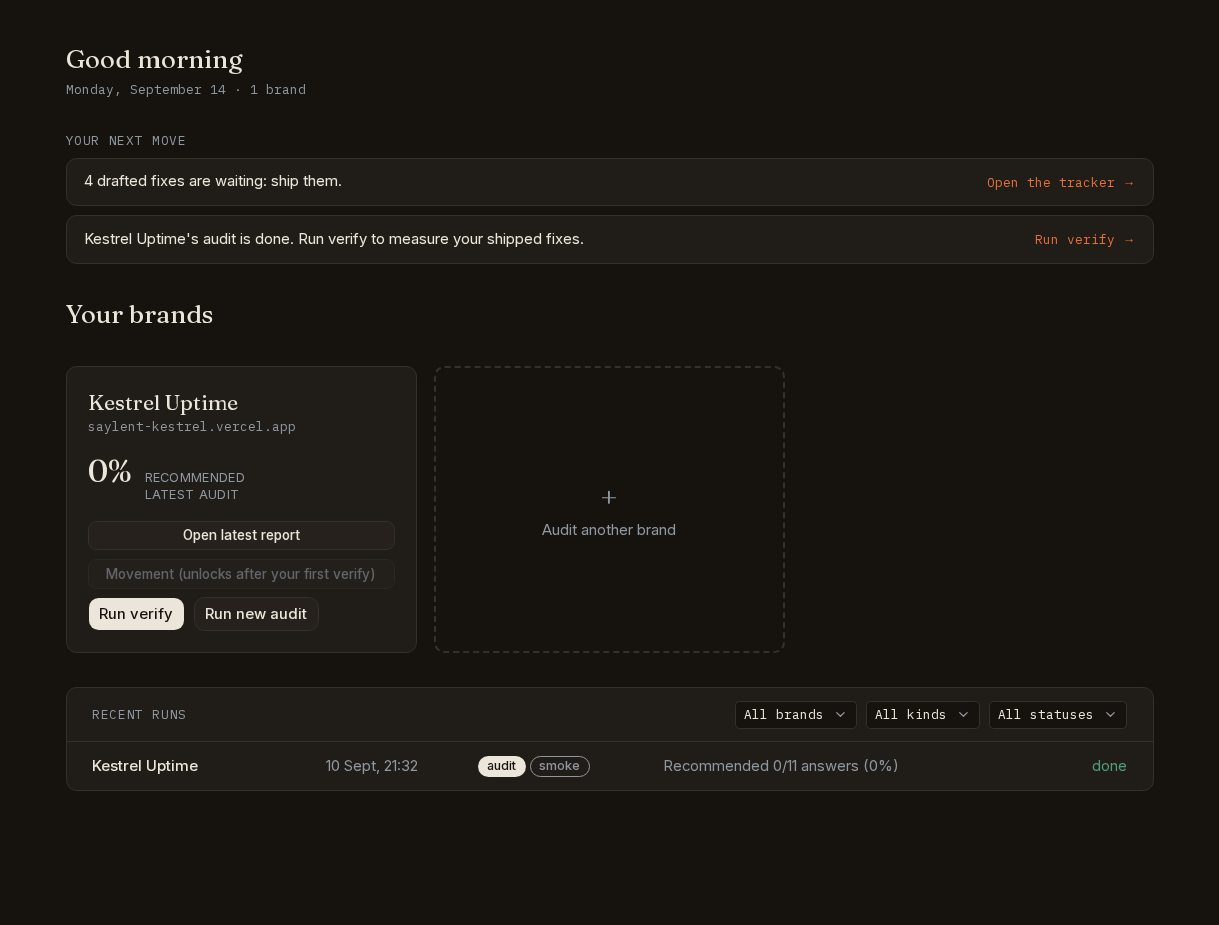
Two people, five brands and a year of runs do not fit in a folder. Deploy the same engine with a memory: history, a fix tracker that knows what you shipped, scheduled verifies and share links. One deployment, as many user accounts as you like, each isolated from the others, on infrastructure you own.
Operate it for others
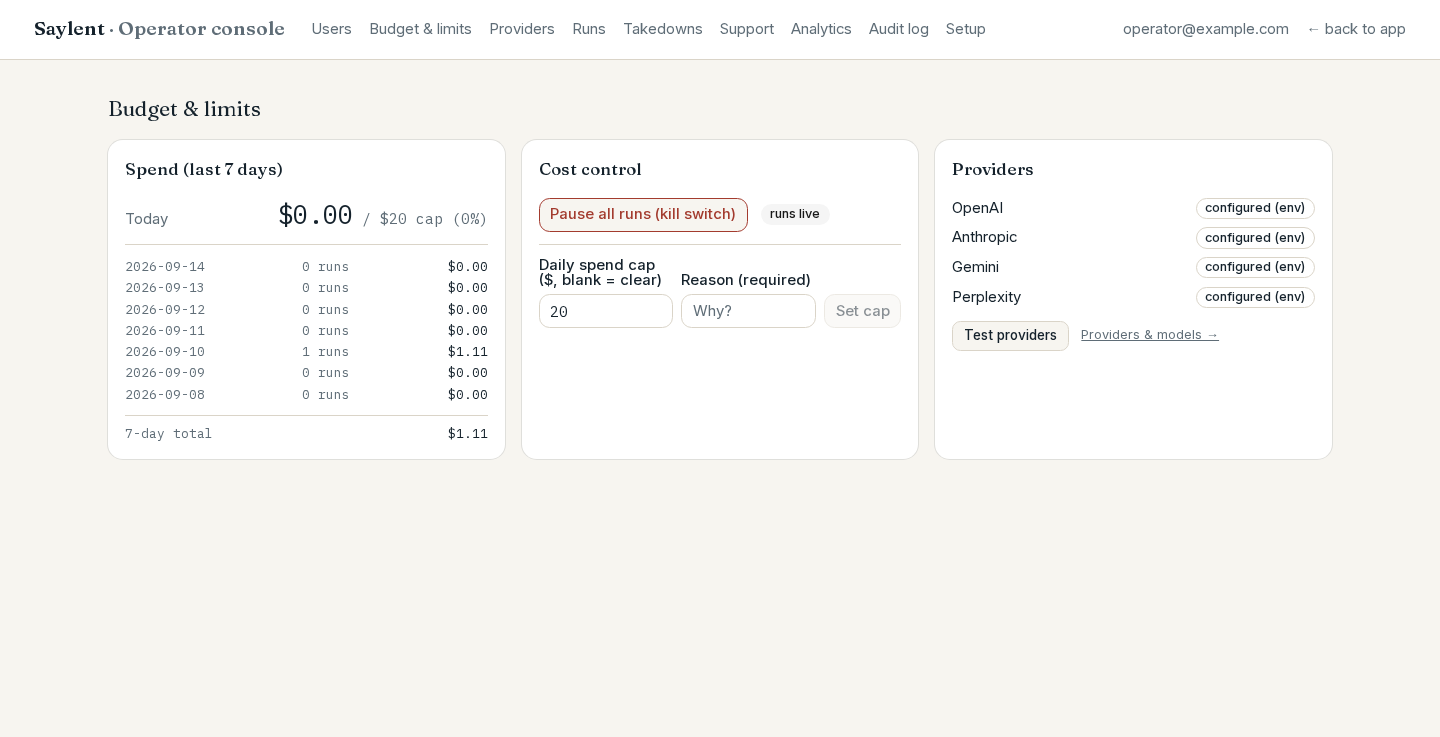
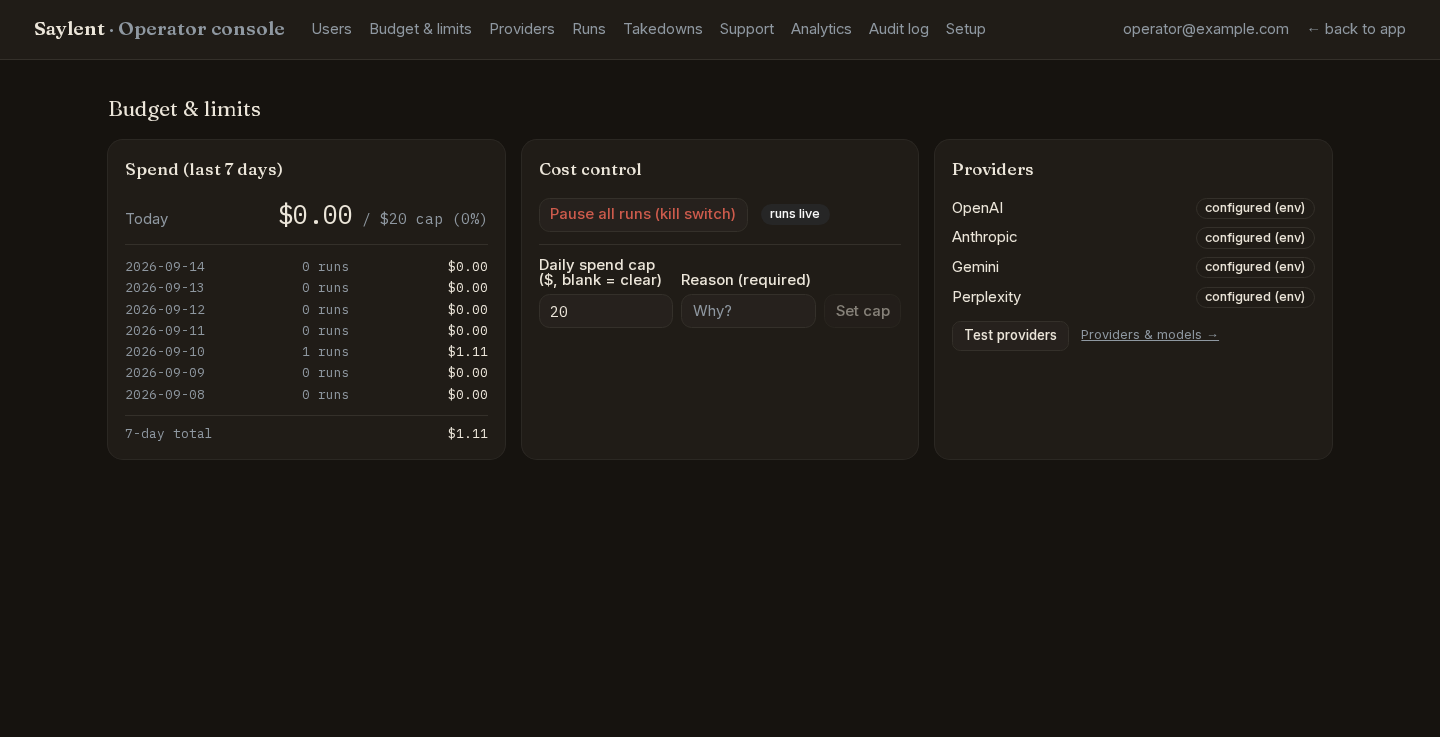
Somebody owns the keys, the bill and the blast radius. The operator console is the daily spend cap, the kill switch that stops every run at once, a model per role with no redeploy, and an append-only log of who changed what.
Automate
The same checks on every push, inside your agent, or inside your own program. The CI gate costs $0 and needs no keys; the MCP server and the library spend only your own credits, under the same ceiling the command respects.
.github/workflows/ai-access.yml
on: [push]
jobs:
  ai-access:
    runs-on: ubuntu-latest
    steps:
      - uses: yotambraun/saylent@v0
        with:
          domain: example.com
Understand
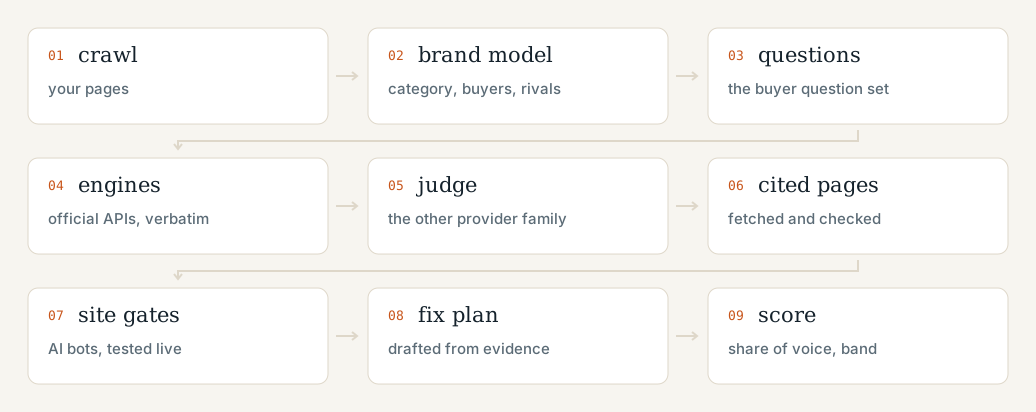
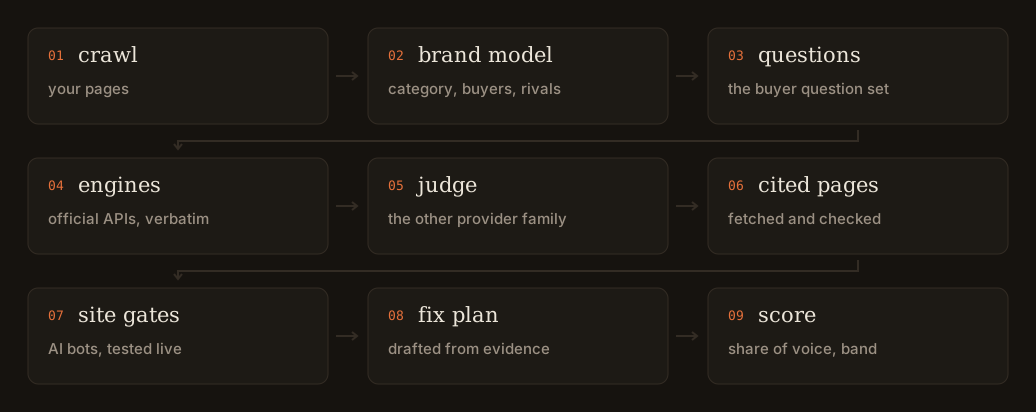
Nine stages, each one narrating itself and each one saying where you can change it. Presence is a deterministic alias match, everything else is judged by a model from the other provider family, and the report states a band instead of a number the draws cannot support.
Project
Apache-2.0, solo-maintained, and the test suite runs at $0 with no keys and no database. Adding an answer engine is one file implementing one interface; adding a site check is one registry entry and one test.
What it costs
Real numbers by profile, from recorded runs, before you run anything. Your keys, your dollars.
What gets sent to providers
Exactly what leaves your machine, to whom, and what never does. No telemetry, anywhere.
Compared with hosted tools
Sourced prices, dated, and the five things the hosted tools still do that this does not.
Run it on your own domain
npx saylent audit example.com